A Quick Temperature Check Blog Piece
It’s September and a new season is beginning. Beyond everyone’s manifestation for warmer days, small talks about the weather are about to get personal. And I mean sweat dripping from your forehead, personal. Because as the seasons change, so will the transitions trajectory as we silently count down the days towards El Niño.
What is it? Despite the week-long inexplicable shift swaps of sunny workweeks to weekend rainfall, just enough to cool the Earth’s core, and vice-versa. This is us transitioning to a season where hot flashes will turn to heat strokes. It is a relentless period with higher temperatures and heatwaves, a lot of wildfires (almost anywhere with greenery), and most importantly, FOOD AND WATER IS SCARCE! Talk about dry spells tenfold. And its effects when they hit you; you’d wish you had known better.
This might be everyone’s thoughts who experienced the Cape Town Day Zero in 2018. But imagine yourself having to gear up for something that might be even worse than before. Prices have gone up; the entire globe went through a pandemic (one would reflect as our immune systems faced a new age virus that still has its effects in play – think of how many times you’ve gone to the doctor since 2020). And let’s talk about how unemployment is making things worse. You can’t take yourself to the doctor; bread is R20, and you’d rather buy a gas tank that’ll sustain you for the month (and some) than buy R300’s worth of electricity to just get 50 kWh (at best). And that’s if you’re renting.
Coming back from the Southern African Development Community (SADC) Civil Society Forum and having attended the Southern Africa Youth Forum (SAYoF) back in July, one thing is for certain: WE REALLY DON’T KNOW WHERE THE DANGER IS! By we I mean communities – we aren’t proactive enough, let’s face it. Our apathy has led to resilience being defined and measured for us (and no it’s not inclusive, trust me). By we I mean leaders/activists/changemakers, are we really in solidarity or do we just smile for the cameras? How many partnerships are we withholding just because values don’t align (or even worse, you have no passion? No care? Ask yourself really). And definitely not me (yet) but a person holding power and high influence within government? Do you see yourself as a good enough representation of how policies should be developed, implemented and measured? Because it’s not asking for much really, but one would hope so.
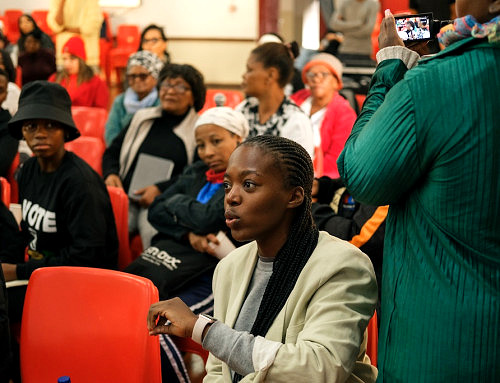
The engagements at both these events (SAYoF and SADC Civil Society Forum) had something unsettling that was lingering: representation. Sitting in a room full of people talking about climate justice, economic transformation across the region and inequality knowing that, outside, or back home, communities are already living the consequences. I found myself asking this question: are we actually ready for what is to come?
Not only in terms of climate shocks but the political landscape, the social and economic systems that get to decide who survives, who pays for them and who gets left behind. At SAYoF the youth gathered to say what works, what isn’t, and what support is needed and for whom. At the Forum, we questioned: who has power and who gets to decide. One of the clearest takeaways from both forums was representation and implementation and ways to measure. Now all we are left to do is to determine who implements, by when and with what resources and what happens when they don’t.
The timing of it all matters; their thematic discussions matter the most. The 2026 SAYoF theme itself was “Nourishing Futures: Enhancing Food Security and Water Resilience through Sustainable Agriculture and Climate Action for Youth Empowerment.” That gives you a very natural bridge into El Niño, how youth said it’d show up in their countries, sectors and businesses and daily lives. A regional youth forum has placed food security and water resilience at the center of Southern Africa’s development conversation, while El Niño reminds us how quickly both can become vulnerable. We highlighted that agriculture and food systems have shown to be an important source of employment for young people, while identifying barriers to land, finance, markets, technology, red tape, skills and meaningful participation in decision-making processes.
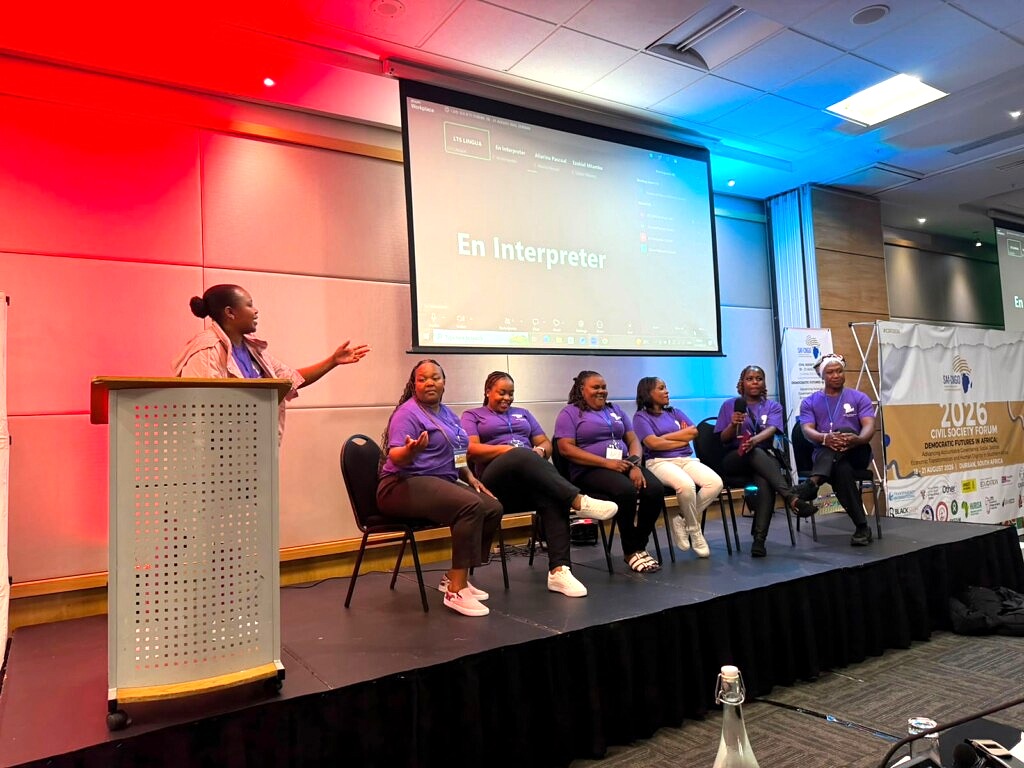
Here’s the kicker, only one, JUST ONE, female panelist mentioned El Niño at the Civil Society Forum. Mentioned how it could further exacerbate the vulnerability of gendered groups, the impacts of invisible care work disproportionately affecting said gendered groups and how it just doesn’t make sense that no one seems to prepare for it – let alone find tools and resources (and financing) for adaptation. The gap matters, especially when we are talking about public budgets, debt servicing (this is where most of our tax goes by the way) and “economic transformation.”
So, are we then transitioning toward a just future? Will we survive this storm? The conversation gets uncomfortable now. Are we really seeing the development? If communities are expected to sacrifice land, livelihoods, health and environmental safety in the name of economic growth, then we must ask ourselves who that growth is actually serving. A Just Transition means changing the relationship between planet, power, and people.
A framework that stood out in the SADC Forum was:
Ask. Invest. Measure.
Ask your communities what their priorities are: as a councilor secure water tanks, elderly clinic pickups, food garden trading. As a minister, assign the right people with enough resources.
Invest in people, not only infrastructure or projects, start with the youth, getting them conscientised about these matters – this will create ideas that are tailored according to the level of empowerment you give them. And measure what changes in people’s lives. Because resilience should not mean expecting communities to continuously absorb crises, they did not create.
So let this temperature check also be a reality check: there’s not much time, but there’s still time. Enough to want to make a difference in your own life. Think of the next season as an alignment of preparedness. Let’s be proactive so we don’t have to be reactive. Let’s have consideration and awareness. The calm, if there is one, should not make us comfortable. It should make us resilient at all costs.
by Mthembukazi Bavuma